
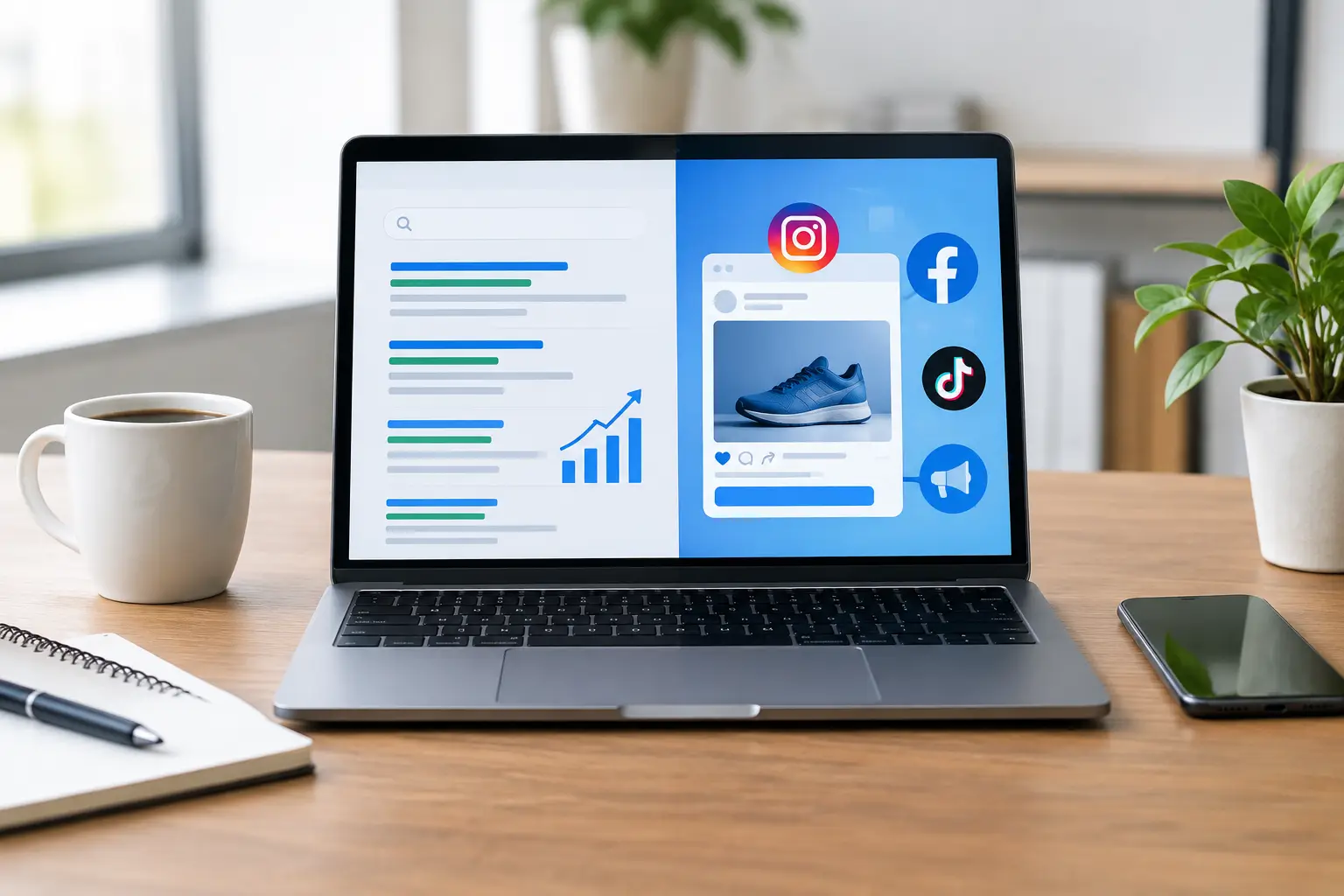
A Ballina plumber appears when someone searches “emergency plumber near me”. A local boutique catches attention with a sharp video of new-season arrivals while customers scroll Facebook or Instagram. Both can bring in business, but they work for very different reasons. That is the real question behind SEO versus social advertising: are you trying to be found when demand already exists, or create demand before someone starts searching?
For many Australian small businesses, the best answer is not picking a permanent winner. It is knowing which channel deserves the bigger slice of your budget right now, based on your goals, timing and the way customers make decisions.
SEO versus social advertising: the core difference
SEO, or search engine optimisation, helps your website appear in unpaid search results. When people type a service, location or problem into Google, good SEO gives your business a stronger chance of being there. It is built around useful website content, local signals, technical performance and a site that makes it easy for Google and customers to understand what you offer.
Social advertising puts paid messages in front of people on platforms such as Facebook, Instagram, LinkedIn and TikTok. Rather than waiting for a person to search, you target them by location, interests, demographics, behaviours or previous interactions with your business.
Put simply, SEO captures intent. Social ads create awareness and prompt action.
That distinction matters. A person searching “accountant Ballina” is likely close to choosing an accountant. Someone watching a video from a local accounting firm may not need one this week, but they might remember the business when tax time rolls around. One channel catches a hand already in the air. The other gets more people to notice you in the first place.
When SEO is the smarter investment
SEO is usually a strong fit when customers actively search for what you sell. Think tradies, dentists, lawyers, accountants, builders, mechanics, health providers, accommodation businesses and professional services. If a customer has a pressing need, Google is often the first stop.
The major upside is staying power. A well-built page that ranks for a valuable local search can keep attracting enquiries without charging you for every click. Unlike a social campaign, visibility does not disappear the second you pause the ad spend.
There is a catch, of course. SEO takes time. New websites rarely leap to page one overnight, especially in competitive industries or larger cities. Google needs time to crawl your site, understand its relevance and see signs that it is a credible result. A realistic SEO plan is generally measured in months, not days.
It also depends on your website. Sending potential customers to a slow, confusing or outdated site wastes the opportunity SEO creates. Search visibility gets people through the door, but clear service pages, strong calls to action, mobile-friendly design and fast Australian hosting help turn those visits into enquiries.
For a local business, the foundations are often less glamorous than a viral social post, but highly valuable: accurate service and location pages, clear contact details, genuine customer reviews, helpful answers to common questions and a properly managed Google Business Profile. These are the practical details that help a business show up when someone nearby is ready to call.
SEO is not ideal if you need a flood of leads by Friday or you are promoting something with a very short shelf life. A weekend event, limited product drop or last-minute sale needs a faster lever.
What SEO is best at
SEO earns its keep when your aim is consistent, high-intent website traffic over the long term. It can reduce reliance on paid advertising, strengthen trust before a prospect even contacts you and help smaller businesses compete locally without trying to outspend national brands.
It is particularly effective when your services have clear search demand and each converted lead is worth a decent amount. One ongoing bookkeeping client, renovation project or legal matter can make a steady SEO investment worthwhile.
When social advertising earns its place
Social advertising is fast, visual and highly flexible. You can launch a campaign quickly, set a defined spend and put a strong offer in front of a carefully chosen audience. That makes it useful for businesses that need momentum now.
A café can promote a new menu to locals within a few kilometres. A retailer can show fresh arrivals to people who have previously visited its website. A fitness studio can run a limited-time membership offer. A builder can use before-and-after project videos to demonstrate quality long before someone is ready to request a quote.
This is where social can shine: products and services that look good, feel aspirational or benefit from demonstration. It is also a powerful remarketing tool. Someone may visit your website after finding you on Google, leave without enquiring, then see a helpful reminder on Facebook or Instagram a few days later. That second touchpoint can make a big difference.
The trade-off is that paid reach is rented, not owned. When the campaign ends, the traffic usually ends too. Results can also fluctuate as audiences tire of an ad, competitors increase their spend or platform algorithms change the rules.
Good social advertising needs more than clicking the Boost button. It needs a clear audience, a compelling creative idea, a sensible offer and a landing page that matches the promise in the ad. If the ad says “Book a free quote” but the website buries the contact form, your budget can disappear quickly.
What social ads are best at
Social ads are well suited to launches, promotions, seasonal campaigns, brand awareness and audience growth. They are also valuable for businesses with little search volume. People may not search for a new clothing label, a specialty gift box or a premium landscaping style, but an eye-catching ad can introduce them to it.
They can help you test messages quickly, too. If one ad angle consistently brings enquiries and another falls flat, you learn what your customers care about without waiting months for organic rankings to shift.
Budget, timing and the value of a lead
The right choice often comes down to three practical questions: How quickly do you need results? How often do people search for your offer? What is a new customer worth to your business?
If you are opening a new salon next month, social advertising can help fill the diary quickly. At the same time, starting SEO early ensures you are building a dependable local presence for searches such as “hairdresser near me” and “balayage Ballina”.
If you run an established electrical business and most customers call after searching online, SEO may deserve the heavier ongoing investment. Social ads can still support it, particularly for retargeting or recruitment, but search is likely where the strongest immediate intent sits.
Be wary of judging either channel only by cheap clicks. A $1 social click is not automatically better than a $6 search visit. The more useful number is cost per qualified enquiry, then cost per actual customer. A campaign that produces fewer leads can still win if those leads are a much better fit and convert more often.
The strongest approach is often both, with different jobs
SEO and social advertising work especially well together when each has a defined role. SEO helps you appear for people already looking. Social ads introduce your brand, demonstrate your work and bring previous visitors back. Your website becomes the home base where both audiences can understand your offer and take the next step.
For example, a local kitchen renovation business might use SEO to rank for terms related to kitchen renovations in its service area. It could use social advertising to show striking project transformations, target homeowners and retarget people who viewed its gallery or quote page. The two channels are not competing for the same job. They are supporting different moments in a customer’s decision.
The same goes for content. A helpful article answering a common customer question can support SEO over time. A short video based on that article can become a social ad that builds awareness now. One useful idea can do more than one piece of work for your business.
Start with the channel that matches your next business goal
If leads are quiet and customers are searching for your service every day, put energy into a website and SEO strategy that makes you easy to find. If you have a visual offer, a timely promotion or a new audience to reach, social advertising can get your message moving quickly. If growth is the goal, make room for both once the basics are working.
The key is not chasing every shiny platform or throwing money at ads without a plan. Choose the next practical move, track calls and enquiries properly, and improve what is already showing promise. A clever digital strategy should feel less like hard work and more like having a capable local team in your corner. When you are ready to turn website visits and scrolling thumbs into real business, Catchy Pages is always up for a cuppa and a straight-talking chat.