
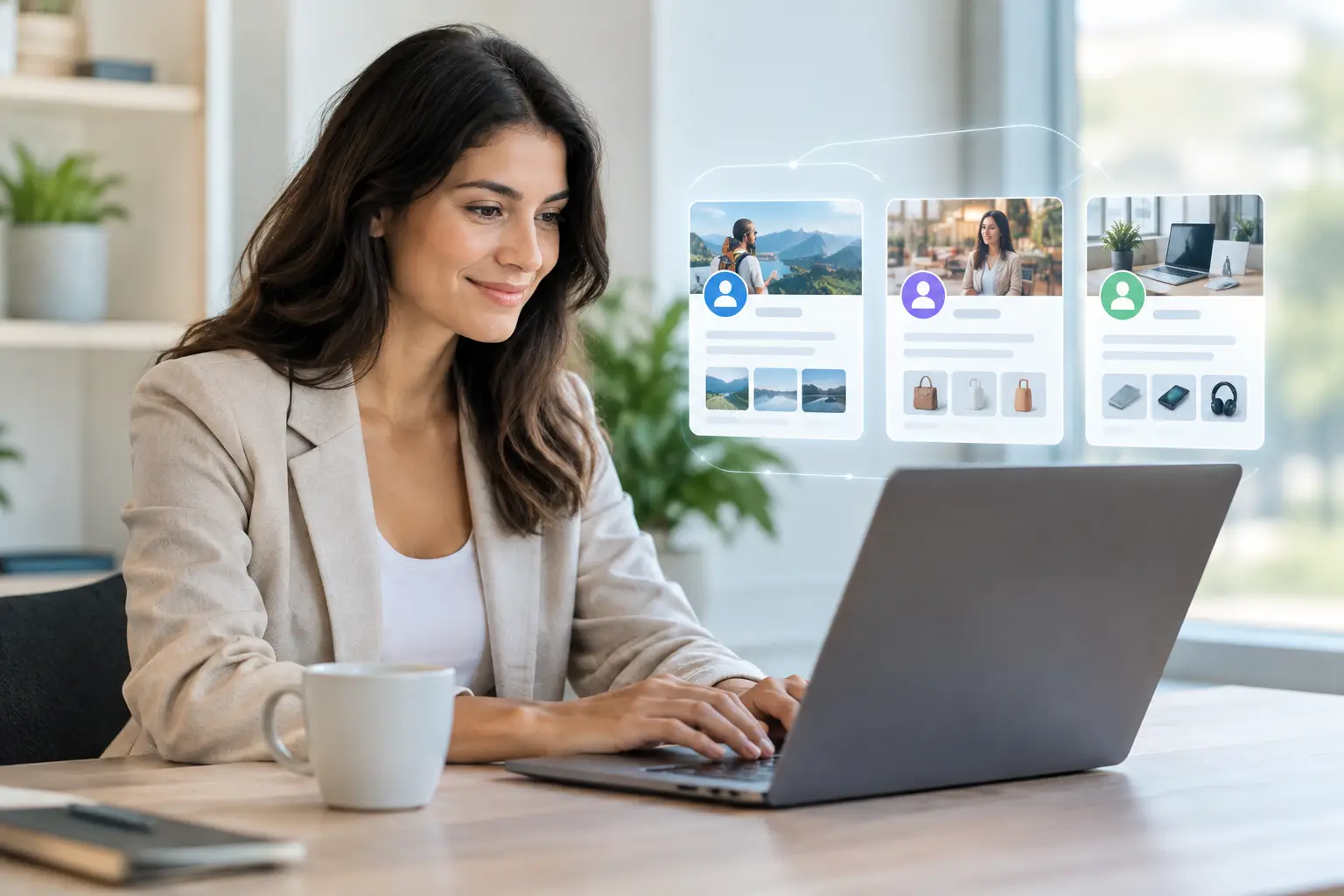
A website that gives every visitor the exact same experience is a bit like answering every customer enquiry with the same script. It might be polite, but it is rarely persuasive. AI website personalisation helps your site respond more intelligently to what people need, making it easier for the right customer to take the next step.
For a local service business, that could mean showing emergency repair information to someone searching after hours. For an online retailer, it could mean bringing back the products a visitor viewed last week. For a professional service, it could mean replacing broad sales copy with the proof, service details and call to action that fit their likely concern.
This is not about making your website feel creepy or overcomplicated. Done well, personalisation is simply good customer service on a screen.
What is AI website personalisation?
AI website personalisation uses data and machine learning to tailor parts of a website to each visitor or visitor group. Rather than manually building a separate page for every possible customer, the technology identifies useful patterns and adjusts content, recommendations, offers or journeys accordingly.
The information may include how someone arrived on your site, the device they are using, pages they have viewed, their location, past purchases or actions they have taken. A visitor who lands from a Google ad for “commercial plumbing Ballina” should not necessarily see the same opening message as someone who has returned three times to read about residential maintenance.
The goal is not to guess everything about a person. It is to remove friction. Give people the information they came for, help them find a suitable service or product, and make contacting you feel like the obvious next move.
For small and medium Australian businesses, that is where the value sits. You do not need enterprise-level complexity to make a website work harder. You need a clear customer journey, useful data and a sensible place to start.
Why a one-size-fits-all site can cost leads
Most business websites are built around the business, not the visitor. The home page describes every service, every audience and every selling point at once. That can be necessary to a degree, but it also makes visitors do more work than they should.
Consider an electrical business serving homeowners, property managers and commercial operators. Each audience has different priorities. A homeowner may want a fast booking and reassurance that the team is licensed. A property manager may need reliable maintenance scheduling and clear invoicing. A commercial client may care about project capability, compliance and response times.
When every visitor sees the same generic page, those messages compete. With thoughtful personalisation, the website can give more prominence to the relevant service area, case study or enquiry path. The business still has one strong brand. It simply presents the most useful doorway first.
That relevance matters because visitors decide quickly whether a site is for them. If the answer is obvious, they are more likely to stay, enquire or buy. If they have to hunt through menus, compare vague service descriptions and fill in a long form, they may head back to Google and choose the next result.
Where AI personalisation makes a practical difference
Personalisation does not have to mean rewriting every page on your website. Often, the best results come from improving a few high-traffic, high-intent moments.
Better landing pages for paid campaigns
If you are paying for search or social ads, your landing page needs to continue the conversation from the ad. AI can help match headings, images, proof points and calls to action with the campaign, audience or keyword group that brought someone there.
A person clicking an ad for website design should land on a page that makes website design the hero, not a general digital marketing page where they need to scroll past six unrelated services. The same applies to location-based campaigns. A Northern Rivers visitor should see locally relevant signals where appropriate, while a broader Australian campaign can speak to the needs of its wider market.
Smarter product and service recommendations
For ecommerce businesses, product recommendations are the familiar example. If someone is looking at a particular style, size or category, a website can suggest complementary products or sensible alternatives. The aim is to help, not bombard them with random extras.
Service businesses can use the same thinking. Someone reading about SEO may be shown a related website audit offer. Someone exploring web hosting may benefit from a prompt about managed support. The recommendation should reflect genuine next-step value, not merely chase a bigger sale.
More useful calls to action
Not every visitor is ready to request a quote. Some need pricing guidance, examples of previous work, a service-area check or a quick answer to a common question. AI can help decide which call to action is most likely to help based on the page viewed and behaviour shown.
That might mean offering a callback form to a visitor who has returned several times, while showing a simple service guide to a first-time visitor still researching options. Small changes like this can make a site feel more helpful without turning it into a noisy sales machine.
Follow-up that reflects real interest
When personalisation is connected properly with email marketing and customer data, it can support better follow-up. A visitor who downloaded a guide about rebranding should not receive a generic email full of unrelated offers. They may instead receive useful information about brand consistency, logo design or preparing for a new website.
There is a line here. Follow-up should be expected, relevant and permission-based. If it feels like a business knows too much or contacts people too often, trust disappears quickly.
Start with the customer journey, not the software
It is easy to get distracted by clever tools and flashy demos. Before choosing any platform, work out where your current website is losing people.
Look at the pages that attract the most traffic and the pages that generate the most enquiries. Are visitors coming from different campaigns but receiving the same broad message? Are people repeatedly searching your site for the same information? Do mobile visitors abandon a long form? Are you getting traffic from several regions with different service needs?
These questions reveal practical opportunities. Personalisation should solve a known problem, such as low conversion from ad traffic or poor engagement with a key service page. It should not be added just because AI is the buzzword of the month.
A good first project is usually modest: tailor a paid-campaign landing page, show location-relevant content, improve recommendations on a product category, or adjust calls to action for returning visitors. Measure what happens, then build from there.
The data and privacy side matters
Australians are increasingly alert to how their information is collected and used. That is fair enough. A personalised experience only works when people trust the business behind it.
Be clear about cookies, analytics and marketing consent. Collect the information you genuinely need, protect it properly and avoid using sensitive data in ways that could surprise visitors. If a customer has not agreed to marketing emails, personalisation is not a reason to ignore that preference.
There is also a quality issue. AI is only as helpful as the data and rules behind it. Inaccurate customer records, weak tracking or poorly set-up segments can produce irrelevant messages. Seeing the wrong location, product or service recommendation does not just fail to help. It can make a business look disorganised.
Human oversight remains essential. Review what the website is showing, check for odd results and make sure the language still sounds like your brand. AI can spot patterns at scale, but it cannot replace sound judgement about your customers.
What success should look like
The best AI website personalisation is often barely noticeable. Visitors simply find what they need faster. They see a relevant message, understand the next step and feel more confident getting in touch.
Track outcomes that matter to your business: qualified enquiries, completed purchases, booked calls, repeat visits, average order value or the cost of acquiring a lead. More clicks are nice, but they are not the finish line if they do not lead to worthwhile business.
It also depends on your traffic volume. A website with a small number of monthly visitors may get more immediate value from improving its core pages, speed, SEO and enquiry process first. Personalisation becomes more powerful when there is enough traffic and behaviour data to learn from. That does not mean smaller businesses should ignore it. It means they should use it carefully and start where the payoff is clear.
At Catchy Pages, we see the strongest digital results when the creative, technical and marketing pieces work together. A fast website, clear brand message, well-managed campaigns and smart personalisation give visitors fewer reasons to hesitate.
Your customers do not want a website that shows off how clever its technology is. They want a website that understands the job they are trying to get done. Build for that moment, and your next enquiry may be much closer than you think.